- fr
- en
- MenuBack
- Sofas & Armchairs
- All sofas
- Sofas by sizesBy size
- Sofas by materialBy material
- Sofas by styleBy style
- All armchairs
- Armchairs by materialBy material
- Armchairs by styleBy style
- Benches
- Relax armchairs
- Pouffes & footstools
- Tables & chairs
- All dining tables
- Tables by typeBy type
- Tables by materialBy material
- Tables by typeBy type
- All coffee tables and sofa ends
- Coffee tables by typeBy type
- Coffee tables by materialBy material
- Coffee tables by styleBy style
- tables basses de style
- All the chairs
- Chairs by typeBy type
- Chairs by materialBy material
- Chairs by styleBy style
- All office chairs
- Office chairs by materialBy material
- All bar stools
- Bar stools by styleBy style
- Furnitures
- Cabinets & dressing
- Cabinets by typeBy type
- Armoires par type
- Cabinets by styleBy style
- Armoires & rangements Vintage
- Bar furnitures
- Bars & counters bar by typeBy type
- Furniture bars by styleBy style
- Category bar furniture by style
- All bookcases & shelves
- Bookcases by typeBy type
- Bookcases & shelvesBy style
- Bookcases & shelves by style
- All sideboards
- Sideboards by typeBy type
- Sideboards by styleBy style
- All desks
- Desks by typeBy type
- Desks by styleBy style
- All bedsides
- Bedsides by styleBy style
- Bedsides categories by type
- Bedsides by styleBy style
- Bedside categories by style
- All chiffonniers
- Chiffonniers by styleBy style
- All chests of drawers
- Chests of drawers by styleBy style
- All consoles tables
- Consoles table by styleBy style
- All beds
- All headboards
- All trunks
- Trunks by typeBy type
- Catégorie meubles malles
- All TV stands
- TV stand by styleBy style
- TV furniture category by style
- All shoes cabinets
- Atypical decorative furniture
- Decorative furniture by typeBy type
- Category furniture deco
- All occasional furnitures
- Occasional furniture by typeBy type
- Catégorie meubles appoint par type
- Décoration
- Wall decorations
- Lighting
- Mirrors
- All statues
- Statues by sizeBy size
- Statues by materialBy material
- Good deals
- Collections
- Trends
- pict aero aluminum

- title aero aluminum
- pict art deco

- title art deco
- pict chinois

- Title chinese
- pict contemporain

- title contemporary
- pict eco responsable

- title eco friendly
- pict industriel

- title industrial
- pict marine

- Title marie
- pict nature

- Title nature
- pict scandinavian

- title scandinavian
- pict vintage

- title vintage
- Between you and us
THE MANGO TREE
A wood unlike any other
Originally an essential wood for exotic furniture and decoration, mango wood is a wood that we at Shogun have always loved.
Perhaps you have some of our mango wood furniture and would like to know more about it? Have you noticed colour variations in your furniture? Differences in shade from one board to another, and sometimes even on the same piece? These variations are not the result of artificial treatment, but of an organic phenomenon!
Shogun tells you more about mango wood and why it is a sustainable and unique tree that you can be proud to have in your home.
Who is the mango tree?
The mango tree, whose botanical name is Mangifera indica, is a fruit tree native to South Asia, mainly India and Myanmar, where it has been cultivated for over 4,000 years. It then spread throughout the tropical and subtropical regions of the globe: Southeast Asia, East Africa, Central America, Brazil and certain areas of the Caribbean.
The mango tree thrives in hot, humid and sunny climates. You may even have come across one during your holidays in the sun.
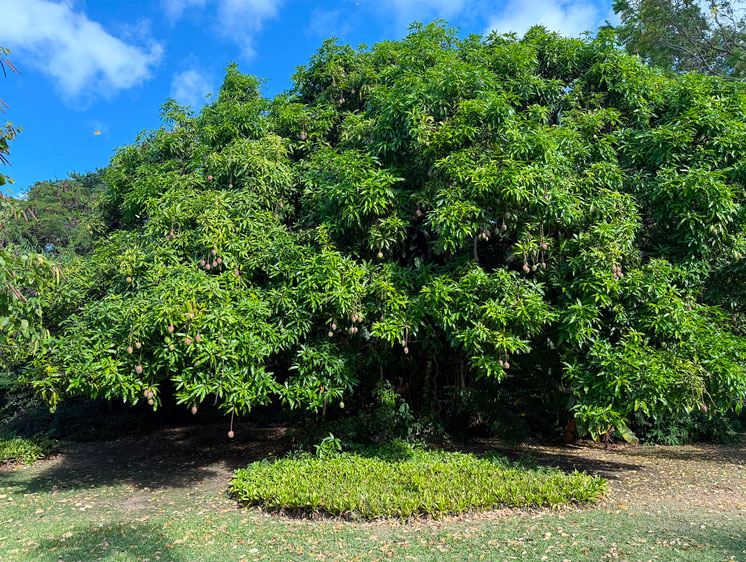
It is an impressive tree due to its silhouette and longevity, which can exceed 100 years. At maturity, it can reach up to 30 metres in height, with a wide and dense canopy that can exceed 10 metres in span. Its trunk, often gnarled and powerful, develops a fibrous structure that will later produce wood with expressive grain.
Its cultivation and why it is a sustainable wood
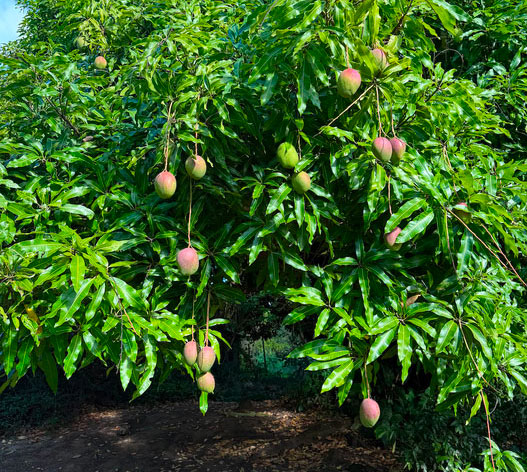
The mango tree is part of an agricultural rather than a forestry approach. Unlike certain species that are exploited exclusively for their wood, the mango tree is primarily a food tree. It is planted to produce mangoes for consumption.
The tree begins to bear fruit between three and five years after planting and continues to do so for 15 to 25 years in an economically viable manner, sometimes even longer. Thus, for several decades, it contributes fully to the agricultural economy and fruit production.
Beyond a certain age, when its production declines, the tree is replaced by younger, more productive plants. It is at this point that its wood is taken over by the forestry industry. This second life is an intelligent use of a tree that has reached the end of its agricultural cycle and helps to prevent primary deforestation.
Colours unique in the world
The mango tree is sometimes affected by fungi known as "colouring" fungi, which develop in certain hot and humid climatic conditions, particularly when the tree suffers natural damage.
These fungi alter the pigmentation of the fibres locally by penetrating the conducting vessels and causing chemical reactions that alter the natural colour of the wood, creating darker areas, contrasting veins or almost marbled effects.
The colours can range from honey blonde to warm brown, sometimes punctuated with deeper shades, almost chocolate or slightly grey. This natural variation in colour is one of the most remarkable aesthetic features of mango wood.
Each piece of furniture made from mango wood thus bears the living trace of the tree from which it came. The contrasts are not flaws: they tell the story of the wood's growth, climate and biological history. What might be considered an irregularity actually becomes an aesthetic signature.
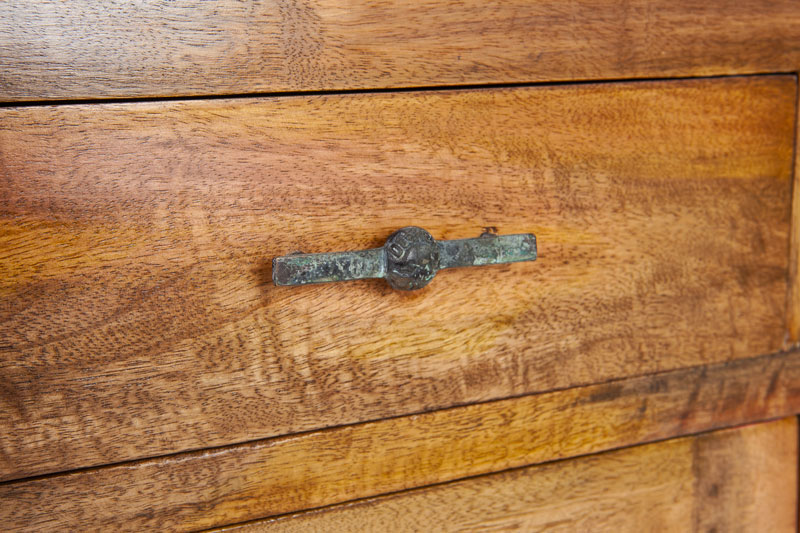
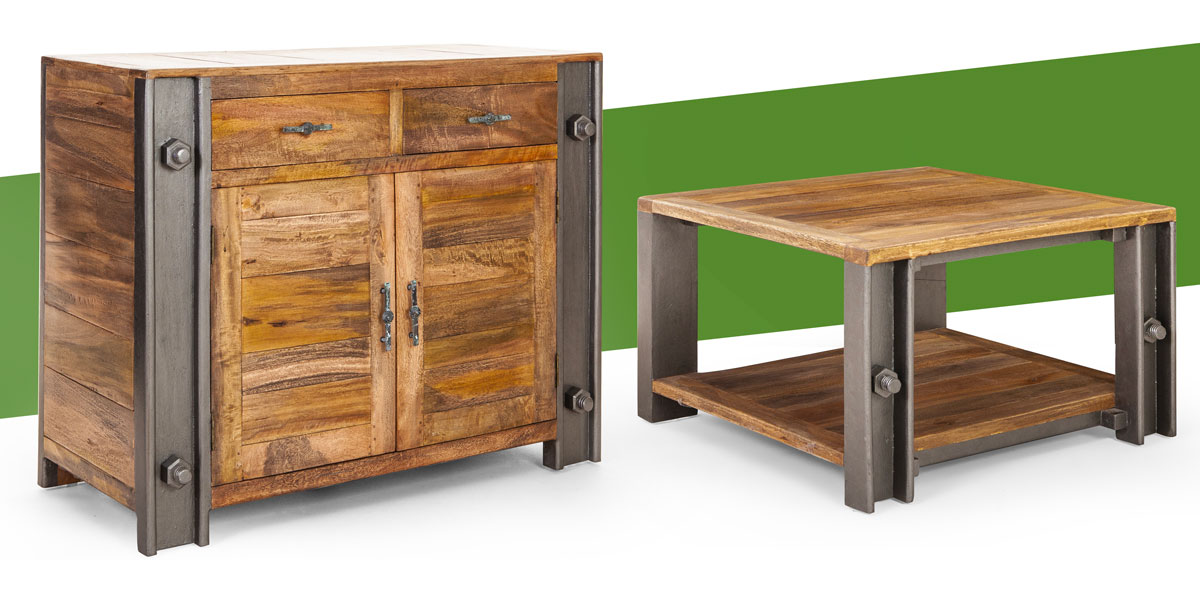
Now you know a little more about this unique wood and will look at your Shogun furniture in a new light. If you would like to purchase a piece of mango wood furniture, our Profile collection is made for you. The wood has been specially selected to highlight the fungus's work, and the nuances are clearly visible. With its bold industrial style, this attractive collection features faux IPN beams, also made from mango wood!