Before the 1980s, felled rubber trees were burned, creating a major source of CO2 for the planet, but they are now recycled and reused by the timber industry to make furniture, either as solid wood or in the form of panels or even veneer.
SHOGUN recrute un vendeur polyvalent pour son magasin Sophia-Antipolis (06560 Valbonne). Pour toute candidature veuillez adresser CV et lettre de motivation à l’adresse shogunsophia@gmail.com

Product successfully added to your shopping cart
Référence
Quantity
Total
There are 0 items in your cart. There is 1 item in your cart.
Total products
Estimation total (port inclus)
Continue shopping Proceed to checkout
English
- fr
- en
Menu
- MenuBack
- Sofas & Armchairs
- All sofas
- Sofas by sizesBy size
- Sofas by materialBy material
- Sofas by styleBy style
- All armchairs
- Armchairs by materialBy material
- Armchairs by styleBy style
- Benches
- Relax armchairs
- Pouffes & footstools
- Tables & chairs
- All dining tables
- Tables by typeBy type
- Tables by materialBy material
- Tables by typeBy type
- All coffee tables and sofa ends
- Coffee tables by typeBy type
- Coffee tables by materialBy material
- Coffee tables by styleBy style
- tables basses de style
- All the chairs
- Chairs by typeBy type
- Chairs by materialBy material
- Chairs by styleBy style
- All office chairs
- Office chairs by materialBy material
- All bar stools
- Bar stools by styleBy style
- Furnitures
- Cabinets & dressing
- Cabinets by typeBy type
- Armoires par type
- Cabinets by styleBy style
- Armoires & rangements Vintage
- Bar furnitures
- Bars & counters bar by typeBy type
- Furniture bars by styleBy style
- Category bar furniture by style
- All bookcases & shelves
- Bookcases by typeBy type
- Bookcases & shelvesBy style
- Bookcases & shelves by style
- All sideboards
- Sideboards by typeBy type
- Sideboards by styleBy style
- All desks
- Desks by typeBy type
- Desks by styleBy style
- All bedsides
- Bedsides by styleBy style
- Bedsides categories by type
- Bedsides by styleBy style
- Bedside categories by style
- All chiffonniers
- Chiffonniers by styleBy style
- All chests of drawers
- Chests of drawers by styleBy style
- All consoles tables
- Consoles table by styleBy style
- All beds
- All headboards
- All trunks
- Trunks by typeBy type
- Catégorie meubles malles
- All TV stands
- TV stand by styleBy style
- TV furniture category by style
- All shoes cabinets
- Atypical decorative furniture
- Decorative furniture by typeBy type
- Category furniture deco
- All occasional furnitures
- Occasional furniture by typeBy type
- Catégorie meubles appoint par type
- Décoration
- Wall decorations
- Lighting
- Mirrors
- All statues
- Statues by sizeBy size
- Statues by materialBy material
- Good deals
- Collections
- Trends
- pict aero aluminum

- title aero aluminum
- pict art deco

- title art deco
- pict chinois

- Title chinese
- pict contemporain

- title contemporary
- pict eco responsable

- title eco friendly
- pict industriel

- title industrial
- pict marine

- Title marie
- pict nature

- Title nature
- pict scandinavian

- title scandinavian
- pict vintage

- title vintage
- Between you and us
Home > Rubberwood: Properties, Sustainability and Furniture Uses
Rubbewood
ONE PLANTATION, TWO USES.
In certain parts of Asia, the landscape is characterised by long, orderly rows of slender trees, carefully planted for a very specific purpose: the harvesting of latex. The rubber tree, sometimes known as the ‘caoutchouc tree’, is at the heart of these plantations. For years, the tree produces this flexible and durable material, which is essential to many industries. Then, when its yield becomes insufficient, it is replaced. It is at this precise moment that its second life begins. At Shogun-deco, this is a wood you’ll come across a lot, and we’ll explain why it’s important to make the most of it.
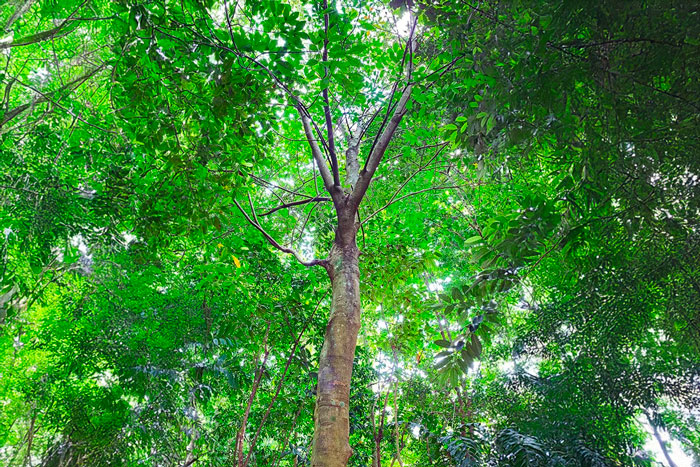
What is the rubber tree?
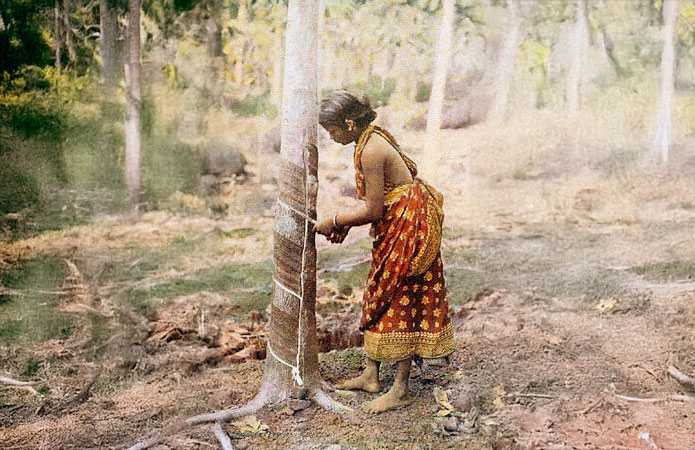
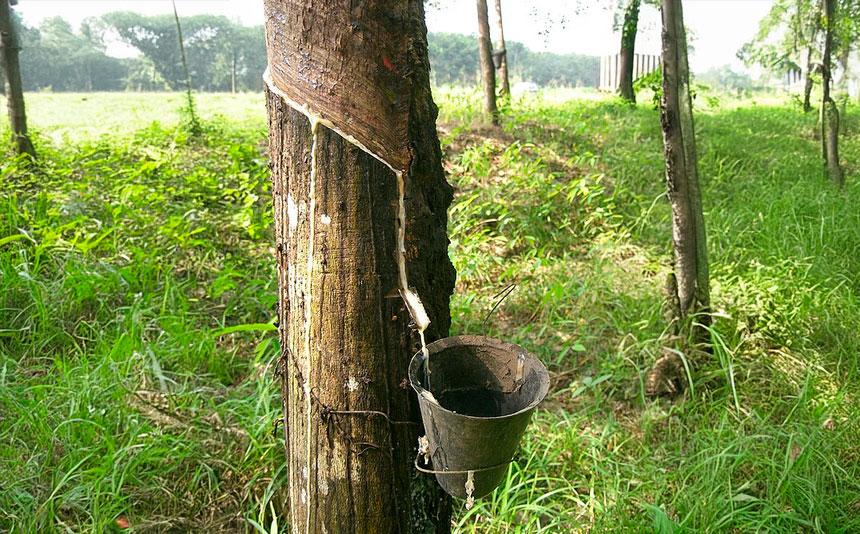
Native to the Amazon, as indicated by its scientific name Hevea brasiliensis, the rubber tree can grow to a height of over 30 metres and have a trunk circumference of 1 metre. It is prized for its production of latex, a milky sap secreted by the tree when its bark is cut, which it uses to seal its wounds through coagulation, acting as a sort of plant-based bandage. This bandage prevents fungi, bacteria and insects from penetrating its tissues.
Brought back in 1876 by the Englishman Sir Henri Alexander Wickham, 74,000 rubber tree seeds were sent to the British colonies, including Ceylon, to attempt cultivation there. With a climate similar to that of the Amazon, the tree adapted perfectly and its cultivation spread throughout South-East Asia and even to Africa.
Reusing rubber trees: a gesture for the planet
The rubber tree begins to produce latex in its fifth year and continues to do so until it is around thirty years old. Latex is used in many industries, the main one being the tyre industry, as 70% of global latex production is used in tyre manufacturing (2010 figures). Given this demand, tyre manufacturers have even acquired rubber plantations to ensure their self-sufficiency.
After 30 years, the tree no longer produces enough latex to meet industry standards and is felled and replaced by a new sapling.
A stylish and contemporary wood
With its very light colour and naturally fine grain, rubberwood is a very contemporary timber. Relatively easy to work with as it has few knots, it allows for clean cuts and neat finishes, which are highly prized. Its light colour enables furniture makers to experiment with a wide variety of finishes. Its medium density ensures excellent strength in furniture, whether for seating or any other type of furniture.
With demand for rubber on the rise, partly due to the automotive industry, deforestation of primary forests is increasing and millions of hectares are being sacrificed for rubber tree monocultures.
By reusing rubberwood from latex plantations, we avoid both the destruction of perfectly healthy trees and the need to develop new crops dedicated solely to furniture. One plantation, two uses: a more responsible approach to the material.
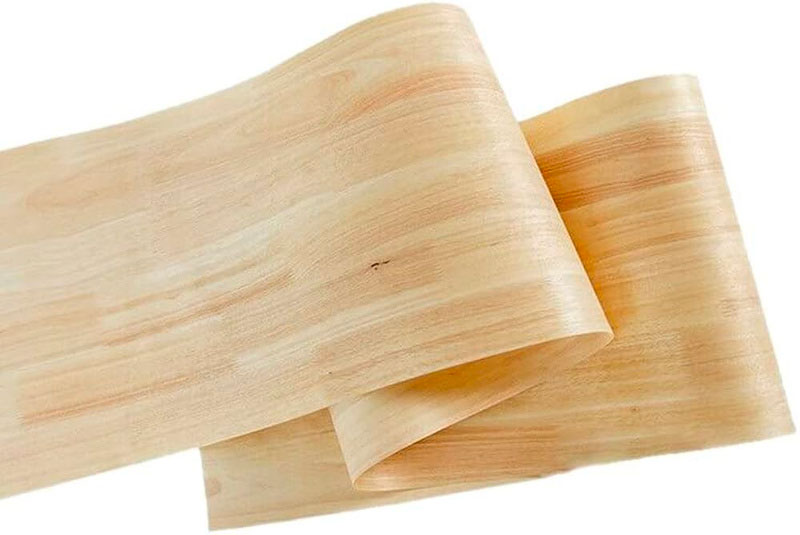
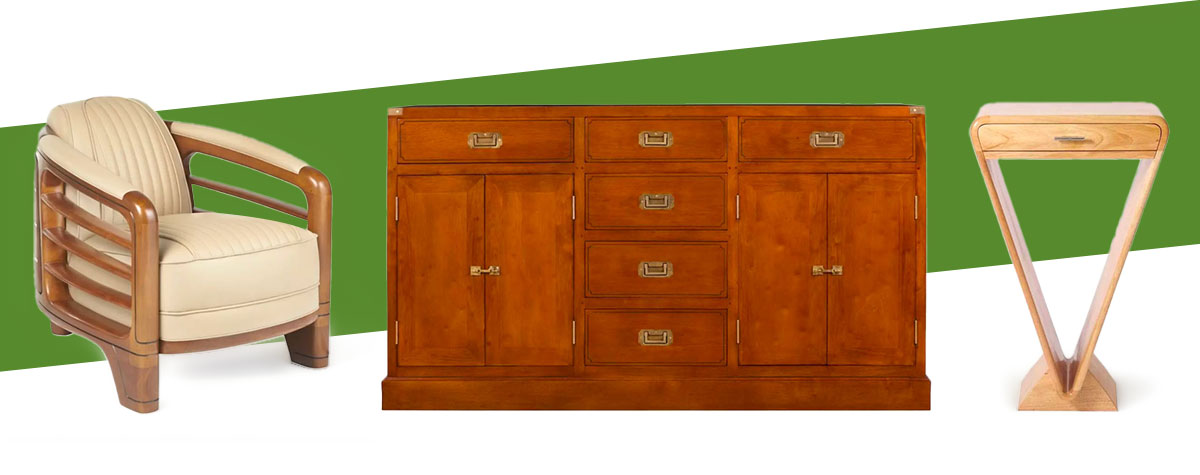
If you’re looking to purchase a piece of rubberwood furniture, our De Bejarry collection is just the thing for you. From nautical styles to Art Deco lines, the wood is beautifully crafted with a flawless finish and high-quality detailing. Made exclusively from solid rubberwood, these are pieces of furniture you will cherish for a lifetime thanks to their durability, and you will have contributed to the virtuous cycle of giving this very special wood a second life.
© 2026 - SHOGUN DECO